


Carolina Tiger Rescue’s mission is saving and protecting wild cats in captivity and in the wild. We believe the ideal home for wildlife is in the wild. Therefore, we believe it is critical to conserve their native habitats.
These are the conservation efforts we support
Palm Oil
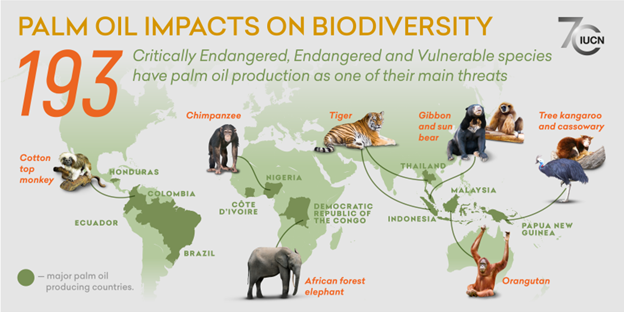
The biggest threat to Sumatran tigers is habitat loss due to agricultural practices such as Palm Oil plantations.
In addition to critical habitat loss, palm oil plantation practices contribute to air pollution, soil and water pollution, soil erosion, climate change, and have devastating impacts on the indigenous people who have relied on the rainforest for generations.
Palm oil is found in 50% of household products that Americans use every day.
Over 25 different common ingredients in consumer products are derived from palm oil.
Tigers are a species in peril
- Wild tiger populations have decreased from 100,000 individuals to about 3,800 in just 100 years.
- Three of the nine tiger subspecies are already extinct, with habitat destruction as one of the main contributors to the tiger’s decline.
- Wild tiger habitats have decreased greatly over the last 100 years.
- Palm oil plantations are not only taking wild habitat from Sumatran tigers, but also from other tiger subspecies, rhinoceros, clouded leopards, orangutans, and many more species.
TAKE ACTION
Be an ethical consumer! Choose to spend your dollar on brands that help protect tiger habitats by avoiding palm oil and its derivatives. Change can be difficult, but brands such as these can make the transition to palm oil free products easy!
- Big Spoon Roasters
- Murphy’s Naturals
- Ben & Jerry’s
- Schmidt’s
- Badger Balm
Contact the customer service lines of your favorite consumer products and let them know you want them to stop using palm oil and palm oil-derived ingredients.
Learn the many names of ingredients that are derived from palm oil to better avoid them.
When you shop, scan for palm oil along with other ingredients you try to avoid – there are alternatives, and some companies are increasingly using other oils.
Because palm oil is in so many consumer products, it can be difficult to avoid buying products that use palm oil. The good news is, if you can’t avoid it, you can look for palm oil that was produced in an environmentally responsible, sustainable way.

BE AN EDUCATED CONSUMER
You can learn more about palm oil production and the problems it presents for the environment and for the survival of many different species. Many organizations are working hard to help educate the public about this critical issue.
Here are links with additional information.